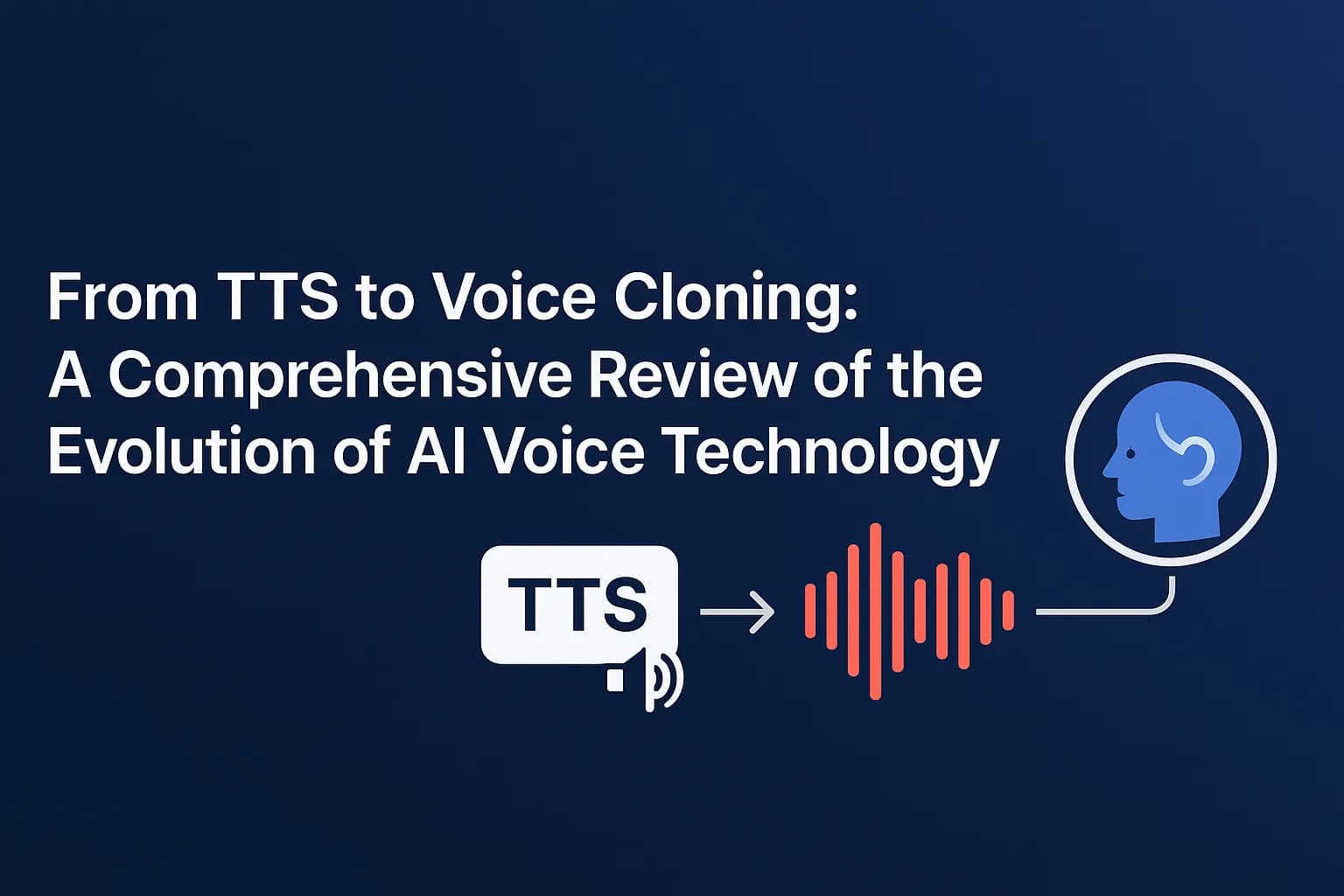
From TTS to Voice Cloning: A Comprehensive Review of the Evolution of AI Voice Technology
Artificial intelligence has transformed the way humans interact with machines, and few areas demonstrate this progress more clearly than AI voice technology. From the early days of robotic text-to-speech systems to today's highly realistic voice cloning solutions, voice AI has evolved into a powerful tool for communication, content creation, and business automation.
In this article, we'll take a deep dive into the history and evolution of AI voice technology—exploring TTS, modern AI voice generator, the rise of voice cloning, and how advanced voice AI platforms like VoicesLab are shaping the future.
The Origins of AI Voice: Early Text-to-Speech (TTS)
The journey of AI voice technology begins with TTS (Text-to-Speech). Early TTS systems, developed decades ago, were rule-based and relied on phonetic dictionaries and predefined pronunciation rules. While functional, these voices sounded mechanical and unnatural, often lacking rhythm, emotion, and clarity.
Despite their limitations, early TTS systems played a crucial role in:
- Assistive technologies for visually impaired users
- Automated announcements and navigation systems
- Basic human–computer interaction
As computing power increased and machine learning emerged, TTS began transitioning from rule-based models to statistical and neural approaches, laying the foundation for modern voice AI.
Neural Networks and the Breakthrough of Natural Speech
The real turning point came with deep learning. Neural TTS models such as WaveNet and Tacotron dramatically improved voice quality by learning speech patterns directly from large datasets of human audio.
These advancements allowed TTS systems to:
- Produce smoother, more natural-sounding speech
- Handle different languages and accents
- Adjust pacing, intonation, and pronunciation
This era marked the transformation of TTS from a purely functional tool into a realistic, expressive audio solution—and opened the door for the modern AI voice generator.
The Rise of AI Voice Generators
As neural TTS matured, AI voice generator became widely available. These tools allow users to convert text into high-quality voice content instantly, without microphones, studios, or voice actors.
Today's AI voice generators are widely used in:
- Video narration and YouTube content
- Podcasts and audiobooks
- Online courses and e-learning platforms
- Marketing, ads, and social media
Compared to traditional voice production, AI voice generators offer:
- Faster content creation
- Lower production costs
- Consistent voice quality at scale
Modern voice AI systems can also generate multiple voices, tones, and speaking styles—making them suitable for both personal creators and enterprise use cases.
Voice Cloning: Recreating the Human Voice
One of the most exciting—and disruptive—advancements in voice AI is voice cloning. Unlike standard TTS, voice cloning aims to replicate a specific person's voice using only a small audio sample.
By analyzing vocal characteristics such as pitch, cadence, and timbre, AI models can generate speech that closely matches the original speaker. This technology has unlocked powerful applications, including:
- Personalized digital assistants
- Audiobooks narrated in the author's own voice
- Voice preservation for individuals with speech loss
- Brand-specific voice identities
At the same time, voice cloning highlights the importance of ethical AI. Responsible platforms ensure consent, transparency, and security to prevent misuse.
Voice AI Today: Beyond Speech Generation
Modern voice AI is no longer limited to reading text aloud. Today's systems combine multiple capabilities:
- Neural TTS
- Voice cloning
- Emotion and style control
- Real-time voice interaction
This allows voice AI to power advanced experiences such as:
- Conversational AI agents
- Real-time dubbing and localization
- Virtual hosts and digital humans
- Customer support automation with human-like voices
Voice AI is becoming more contextual, expressive, and interactive—blurring the line between synthetic and human speech.
Business Impact: Why AI Voice Technology Matters
Voice AI is not just a technical innovation—it's a competitive advantage. Businesses adopting AI voice solutions can:
- Scale audio content globally
- Improve accessibility and inclusivity
- Strengthen brand recognition with a consistent voice
- Reduce reliance on expensive recording processes
Industries such as media, education, gaming, healthcare, and SaaS are rapidly integrating AI voice generators and voice cloning to enhance user experiences.
VoicesLab: Powering the Next Generation of Voice AI
At VoicesLab, we're focused on delivering cutting-edge AI voice solutions that are powerful, flexible, and easy to use. VoicesLab brings together the best of TTS, AI voice generation, and voice cloning into a single, developer- and creator-friendly platform.
With VoicesLab, you can:
- Generate natural, lifelike voices from text
- Create custom AI voice clones with high fidelity
- Support multiple languages and use cases
- Integrate voice AI seamlessly into products and workflows
Whether you're building an app, producing content, or scaling a business, VoicesLab helps you unlock the full potential of voice AI.
The Future of AI Voice Technology
Looking ahead, AI voice technology will continue to evolve toward:
- More emotional and expressive speech
- Real-time adaptive conversations
- Deeper personalization and identity preservation
As voice becomes a primary interface for digital experiences, platforms that combine innovation with responsible design will lead the way.
Conclusion
From the early days of TTS to today's advanced voice cloning and AI voice generator, AI voice technology has come a long way. What started as robotic speech synthesis has evolved into expressive, human-like communication powered by intelligent voice AI.
As this technology continues to mature, tools like VoicesLab are enabling creators and businesses to communicate more naturally, efficiently, and authentically than ever before.