Why Voice-First AI Users Are Choosing Voiceslab Over ChatGPT
ChatGPT is one of the most useful AI products on the market. If your day revolves around brainstorming, drafting, summarizing, or asking questions, it is easy to see why so many people start there.
But voice-first users are not always trying to type better prompts or read longer answers. Many of them want something else: they want to listen, generate spoken output, create with a recognizable voice, and move faster through audio-heavy work.
That is where the comparison starts to shift.
For users who care more about reusable spoken output than text chat, Voiceslab is becoming the better fit. Not because ChatGPT is weak, but because the job is different. A voice-first workflow needs a stable voice layer, cleaner audio generation, and a more practical path from script to finished speech.
Why do voice-first AI users need more than ChatGPT?
ChatGPT is excellent at language reasoning. It helps people think, draft, research, and refine ideas. OpenAI also supports speech generation and voice agents, which means voice is clearly part of the broader product direction.
Still, for most people, ChatGPT remains a text-first experience. You ask a question, you read an answer, maybe you use voice mode for interaction, and then you move on. That works well for general AI help.
Voice-first users often need a different loop:
- generate spoken content repeatedly
- preserve one recognizable voice across outputs
- create audio assets that sound publishable
- reuse the same voice across videos, podcasts, explainers, and multilingual content
That is not just "chat, but spoken." It is a production workflow.
If your real goal is to turn scripts into natural audio, patch voice lines after the fact, or build a repeatable spoken brand, text-first AI starts to feel incomplete. You still need a dedicated voice layer.
How does Voiceslab deliver a better voice-first workflow?
Voiceslab is built around the idea that voice should be reusable.
That sounds simple, but it changes the workflow in a big way. Instead of treating spoken output as a temporary response inside one chat session, Voiceslab helps you create a voice asset you can keep using. That asset can then support podcasts, creator content, video narration, promos, training materials, or multilingual voice projects.
This matters because most voice-first users do not just want "an answer read aloud." They want a voice that sounds like their project, their brand, or their public identity.
With AI voice cloning, the focus shifts from one-off interaction to voice continuity. That is a better match for creators, podcasters, founders, educators, and teams that publish frequently.
Why is reusable voice identity such a big advantage?
Once you start working in audio, consistency becomes one of the hardest things to maintain.
Your tone changes from one recording session to another. Your mic setup changes. A late script revision forces you to patch a line that no longer matches the original take. A team member needs a shorter version for social clips. A translated version needs to sound like the same speaker.
That is exactly where a reusable voice identity becomes more valuable than a general-purpose AI chat tool.
Voiceslab helps users create spoken output that stays tied to a recognizable voice instead of resetting every time they generate audio. If your workflow depends on audience familiarity, that is not a cosmetic benefit. It is part of the product quality.
This is especially useful for:
- podcast hosts who need pickups and recurring segments
- creators who want one stable voice across multiple channels
- businesses that need a consistent brand voice in audio
- teams testing multilingual content without losing voice identity
For this group, the real comparison is not "Which AI is smarter?" It is "Which tool better supports the way I actually publish with voice?"
Is ChatGPT still better at some things?
Yes, clearly.
ChatGPT is still the stronger choice for broad reasoning, open-ended brainstorming, coding help, document analysis, and back-and-forth ideation. If you want a flexible general assistant, it remains one of the best tools available.
That is why this article is not arguing that Voiceslab replaces ChatGPT in every scenario. It does not need to.
The point is narrower, and more practical: for users who prefer voice AI as a working medium, not just a chat interface, Voiceslab often fits better.
That is an important distinction. Many users will still use ChatGPT to draft a script, outline an episode, or shape talking points. But when it is time to turn that material into audio that sounds consistent and reusable, they need a different tool for the next step.
In that workflow, ChatGPT becomes the thinking layer, while Voiceslab becomes the voice layer.
How does Voiceslab save more time for voice-heavy users?
Voice-first users often lose time in places that text-first products barely touch.
They lose time re-recording a sentence because the original file is already edited. They lose time rebuilding intros, sponsor lines, and promos. They lose time trying to make mismatched recordings sound like one session. They lose time switching between writing tools, audio tools, and delivery tools just to keep the voice consistent.
Voiceslab reduces that friction because it is built for spoken output as a repeatable workflow.
Here are a few examples where that difference matters:
Post-edit pickups
You already exported the episode, video, or ad read. Then you catch an outdated line or a missing phrase. A cloned voice gives you a cleaner way to patch it without reopening the entire recording process.
Reusable intros and recurring segments
If your content format repeats, your voice workflow should repeat too. Intros, outros, short CTAs, and promo tags are ideal examples.
Multiformat publishing
A single voice can support long-form content, short clips, trailers, product demos, or supporting educational assets. Once your voice is reusable, your publishing surface gets much wider.
Voice exploration before full commitment
If you are still deciding what kind of spoken style fits your content, a voice library is useful because it lets you evaluate tone, pacing, and presence before you settle on a direction.
For voice-heavy users, these time savings usually matter more than another clever text response.
Why are creators and spoken-content teams leaning this way?
Because voice-first work is not only about convenience. It is about output quality and repeatability.
A podcaster does not want every AI-generated segment to sound like it came from a different product. A creator does not want social clips, trailers, and longer narration to feel disconnected. A founder does not want their audio brand to disappear the moment they stop recording everything manually.
Voiceslab fits these needs well because the platform is already positioned around spoken content, natural-sounding speech for videos, podcasts, and creator work, and repeatable voice generation. That is a tighter fit for production-minded users than a general chat product trying to do everything at once.
If your work is pushing toward voice-based publishing rather than text-only interaction, this is where the value becomes obvious. Voice cloning stops being a novelty and starts becoming infrastructure.
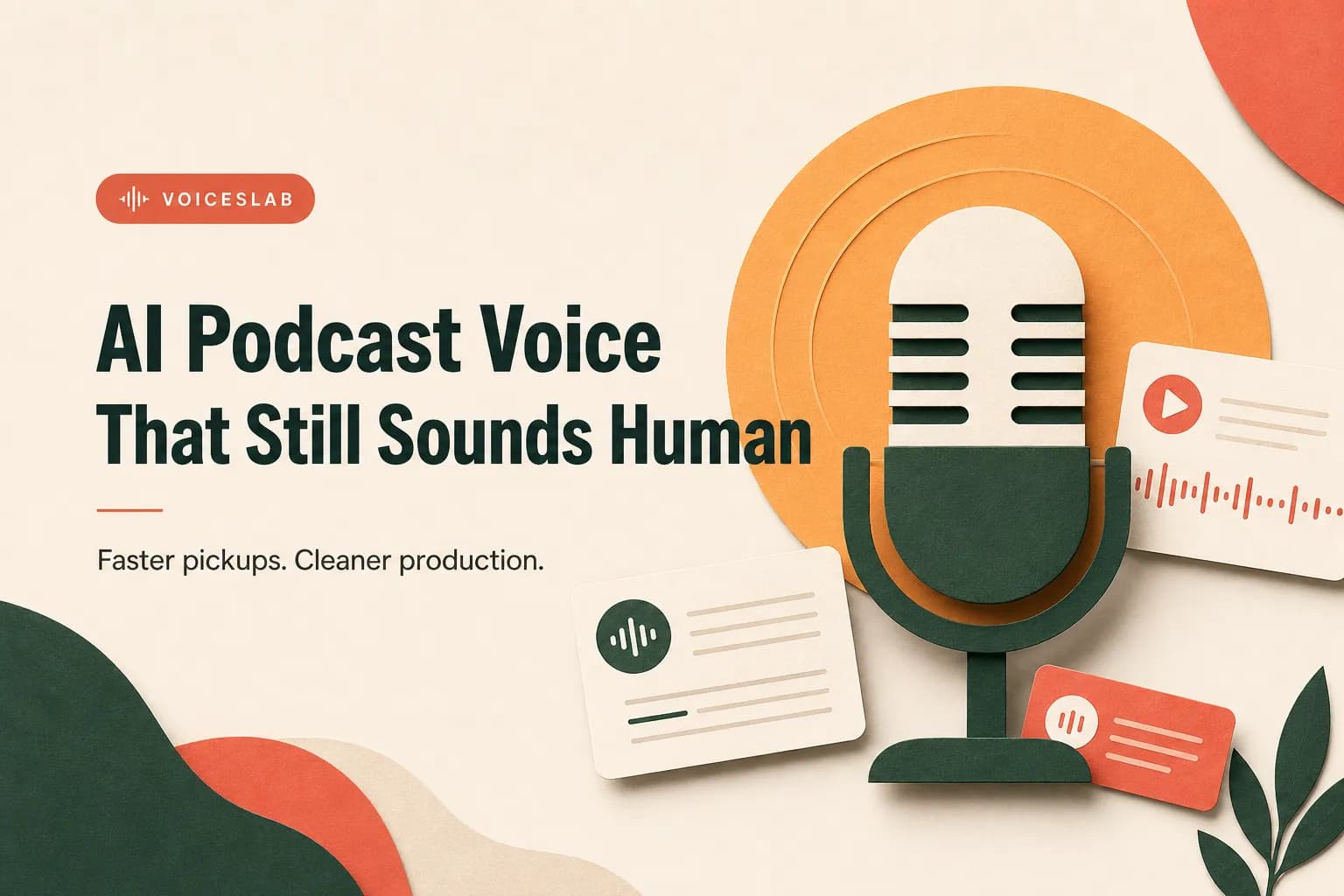
If your workflow extends into longer spoken media, the related Voiceslab guide on AI podcast voice workflows is a useful companion to this topic.
Why trust this comparison?
This article is written from the perspective of people who use AI for spoken output, not just general chat. The comparison focuses on practical friction points such as reusable voice identity, production speed, patch workflows, and how well a tool supports repeated audio publishing after the first experiment.
FAQ
Is Voiceslab better than ChatGPT for all AI tasks?
No. ChatGPT is still stronger for broad reasoning, text generation, and interactive idea work. Voiceslab becomes the better choice when the core job is voice creation, reusable spoken output, and audio consistency.
Can Voiceslab replace ChatGPT?
For some voice-centered workflows, it can replace the part of the stack that users care about most. For many people, though, the more realistic setup is to use ChatGPT for ideation and Voiceslab for the final voice layer.
Why do voice-first users prefer Voiceslab?
Because listening and spoken output are not side features in their workflow. They need a tool built around voice identity, not just a text assistant that can also speak.
What is the biggest difference in practice?
The biggest difference is that ChatGPT helps you think through language, while Voiceslab helps you keep one usable voice across repeated outputs.
Final thoughts
ChatGPT is still one of the best AI tools for text-first work. That part is not really in dispute.
But voice-first users are solving a different problem. They want audio that sounds natural, stays consistent, and can be reused across real publishing workflows. They want a voice asset, not just a spoken answer.
That is why more voice-first users are starting to choose Voiceslab over ChatGPT. For people who care about spoken output, brand continuity, and repeatable voice workflows, it is often the more practical tool.
If that sounds closer to the way you work, the next step is not another text prompt. It is testing a real voice cloning workflow and seeing how much cleaner your output becomes once the voice layer is built for the job.