Voice Cloning Revolution: Why Your Digital Voice Matters More Than Ever
The Day Your Voice Broke Free from Your Body
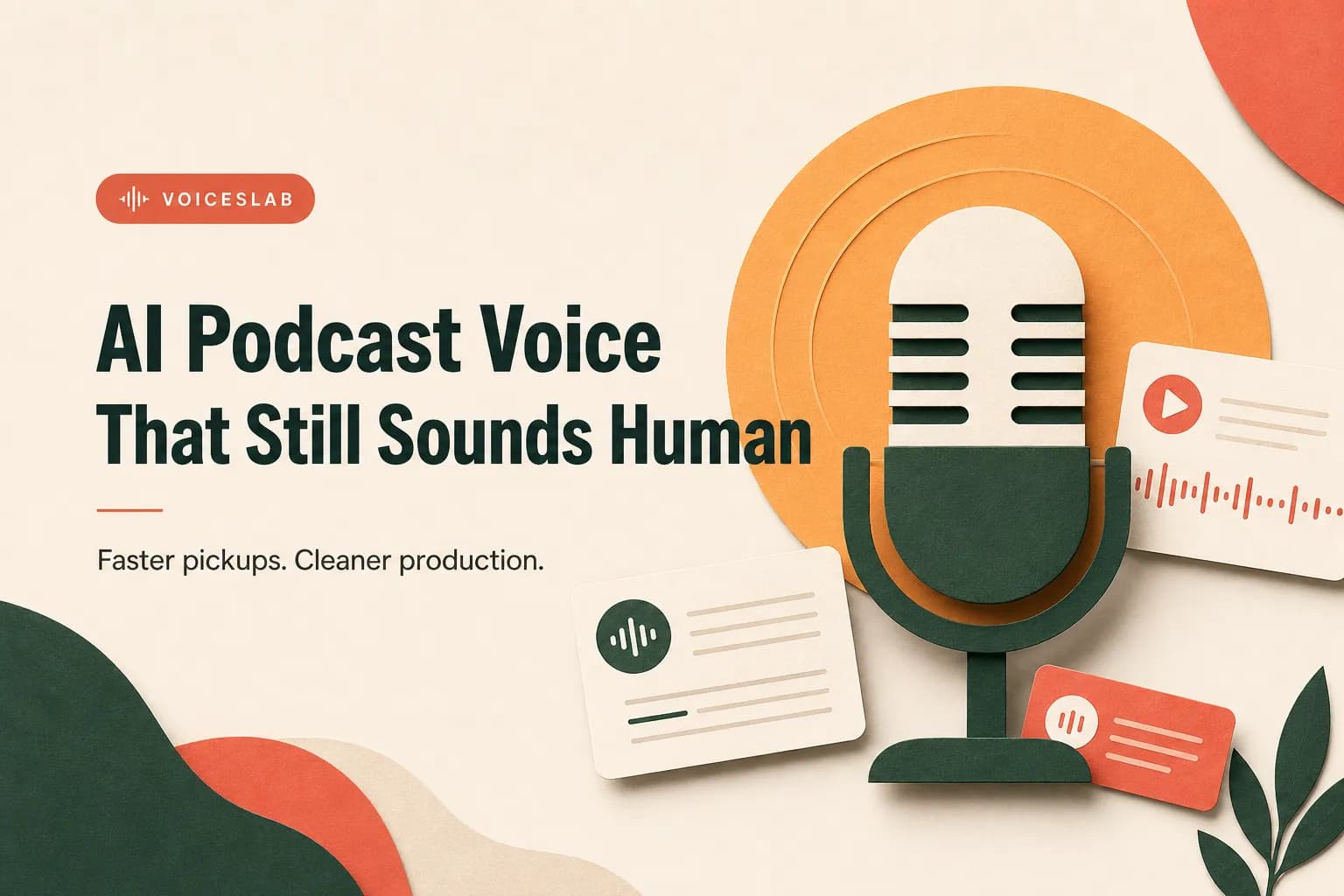
Sarah, a podcast producer in London, had a problem. She'd built a successful show around her distinctive voice and conversational style, but a persistent throat infection was threatening to derail her weekly publishing schedule. Three days before her deadline, she discovered voice cloning technology. Within minutes, she had created a digital version of her voice that sounded so authentic that even her closest listeners couldn't tell the difference.
This isn't science fiction—it's happening right now, and it's changing everything about how we think of voice, identity, and communication in the digital age.
Beyond the Hype: What Voice Cloning Actually Solves
Voice cloning technology has escaped the laboratory and landed squarely in the real world, solving problems that most people didn't even realize they had. At its core, this technology creates a mathematical model of your voice that can speak any text while preserving the nuances that make you sound like... well, you.
But here's what makes it revolutionary: voice cloning doesn't just replicate sound—it democratizes global communication. Your voice can now speak languages you've never learned, maintain consistency across months of content creation, and even preserve your vocal identity for future generations. We're witnessing the emergence of voice as a portable, scalable digital asset that transcends the physical limitations of human speech.
The Economics of Voice: Why This Technology Matters Now
Voice cloning isn't just a cool technical achievement—it's reshaping entire industries by solving economic problems that have plagued content creators for decades. Consider the traditional audiobook industry, where a single narrator might spend 40-60 hours recording a book, then additional hours on retakes and corrections. Voice cloning can reduce this to a fraction of the time while maintaining the emotional depth and consistency that listeners expect.
The numbers tell a compelling story. A typical video game might require 50+ voice actors for various characters, with recording sessions that can stretch across months and cost hundreds of thousands of dollars. Voice cloning technology can generate dozens of unique, consistent character voices from minimal source material, dramatically reducing both time and budget constraints while actually expanding creative possibilities.
But the real transformation is happening in business communication. Companies are discovering that voice cloning allows them to maintain consistent brand voices across multiple languages and markets without the logistical nightmare of coordinating international voice talent. A single spokesperson can now authentically represent a brand in markets they've never visited, speaking languages they've never learned.
Three Real-World Case Studies That Changed Everything
The Language Learning App That Cracked Personalization
When Babbel wanted to create truly personalized learning experiences, they faced an impossible challenge: how do you create thousands of hours of audio content that adapts to each learner's pace and preferences? Voice cloning provided the answer. By creating voice models of their most effective instructors, they could generate unlimited practice exercises, pronunciation guides, and personalized feedback—all while maintaining the human connection that makes learning engaging.
The Documentary Producer Who Brought History to Life
Netflix's "The Last Archive" faced a unique challenge: how do you tell historical stories when many of the key figures left behind only written records? Voice cloning technology allowed them to recreate historically accurate speech patterns from the limited audio recordings available, bringing historical figures to life in a way that felt both authentic and respectful to their legacy.
The Medical Breakthrough That Preserved Identity
When Stephen, a longtime radio host, was diagnosed with laryngeal cancer, his first concern wasn't his health—it was his voice. Working with speech therapists and voice technologists, he created a comprehensive voice clone before his surgery. Today, he continues his broadcasting career using his preserved voice, maintaining the connection with listeners who have followed him for over two decades.
The Hidden Costs of Voice Work (And How Cloning Changes Everything)
Most people don't realize how expensive traditional voice work actually is. A single commercial voice actor can charge $500-2000 for a 30-second advertisement, and that's before you factor in studio rental, direction time, and the inevitable retakes when the client decides they want "more energy" or "warmer feeling."
Audiobook narration presents an even starker example of these hidden costs. Professional narrators typically charge $200-800 per finished hour, meaning a typical 10-hour audiobook can cost $2,000-8,000 in narration fees alone. When you add studio time, editing, and the fact that it takes roughly 6-10 hours of work to produce each finished hour of audio, suddenly that audiobook project is looking at a $15,000-30,000 production budget just for the voice work.
Voice cloning doesn't just reduce these costs—it eliminates them entirely while solving problems that money couldn't fix. Need to change a single sentence in your audiobook after publication? With traditional recording, you're looking at another studio session and careful audio matching. With voice cloning, it's a 30-second edit that maintains perfect consistency with the original recording.
The Creator Economy's New Superpower
Voice cloning is becoming the secret weapon of successful content creators who understand that consistency and efficiency directly translate to revenue. Take Marcus, who runs a financial education YouTube channel. Before discovering voice cloning, he spent three hours recording narration for each 15-minute video, often requiring multiple takes to maintain energy levels throughout lengthy explanations.
Now Marcus records a single, high-energy template reading for each type of content he creates—market analysis, educational explainers, news commentary—and uses voice cloning to generate all his narration from written scripts. The result? He's increased his publishing frequency from twice weekly to daily, while maintaining the vocal consistency that his audience associates with his brand. His channel revenue has tripled in six months, not because he's working harder, but because he's working smarter.
Similar transformations are happening across the creator economy. Podcast producers are using voice cloning to create seamless ad reads that match their show's tone, eliminating the jarring transitions that cause listeners to skip sponsored content. Course creators are generating unlimited practice materials in their own voice, creating more engaging learning experiences without endless recording sessions.
Voiceslab: Where Technology Meets Real Needs
While other platforms focus on showcasing technical capabilities, Voiceslab was built around a simple question: what do creators actually need from voice cloning technology? The answer, it turns out, isn't more features—it's fewer barriers.
The platform's approach reflects this philosophy in every interaction. Where traditional voice cloning might require technical knowledge about sample rates and audio preprocessing, Voiceslab handles these details automatically. Users simply speak naturally into their device's microphone, and the system optimizes everything else behind the scenes.
This simplicity extends to the actual voice generation process. There are no complex parameter adjustments or technical settings to configure. You type your text, the system generates your voice speaking those words, and you download the result. The entire process from script to finished audio takes under two minutes, turning voice production from a technical challenge into a creative tool.
What sets Voiceslab apart isn't just its ease of use—it's the understanding that voice cloning technology succeeds when it disappears into the background, letting creators focus on what they do best: creating content that matters to their audience.
The Trust Factor: Why Voice Authenticity Matters More Than Ever
As voice cloning technology becomes mainstream, we're entering an era where authenticity carries new weight and meaning. The ability to create convincing voice replicas raises important questions about trust, consent, and digital identity that extend far beyond the technology itself.
Smart organizations are getting ahead of these challenges by establishing clear voice governance policies. Media companies now routinely disclose when synthetic voices are used, even when the voice belongs to the person speaking. Educational institutions are developing guidelines for when and how students can use voice cloning in their assignments. Content platforms are implementing verification systems that help audiences distinguish between authentic recordings and AI-generated speech.
This isn't about limiting the technology—it's about building sustainable practices that preserve trust while enabling innovation. The companies and creators who embrace transparency around their use of voice cloning are finding that audiences appreciate the honesty and often become more engaged with content when they understand the creative process behind it.
Your Voice, Your Rules: Starting Smart
The most successful voice cloning implementations start not with the technology, but with a clear understanding of what you're trying to achieve. Before you create your first voice clone, spend time defining your goals and boundaries.
Content creators should consider which types of content feel appropriate for voice cloning and which require authentic recording. Many find that routine elements like intros, outros, and standard explanations work well with cloned voices, while emotional content or breaking news commentary feels more authentic when recorded naturally.
Business users should establish clear policies about who can use company voice models and for what purposes. Some organizations create voice clones of key executives for internal training materials while maintaining strict controls around external communications.
The technology works best when it amplifies your existing capabilities rather than replacing your creative judgment. Think of voice cloning as a sophisticated tool that extends your reach and efficiency, not as a substitute for the human elements that make your communication valuable.
The Competitive Advantage You Didn't Know You Needed
Voice cloning is quietly becoming a competitive differentiator in industries where audio content drives engagement. Podcast networks are using the technology to maintain show consistency even when hosts are unavailable. E-learning companies are creating more personalized educational experiences by allowing instructors to generate unlimited examples and practice materials in their own voice.
The businesses that adopt voice cloning early and thoughtfully are establishing significant advantages over competitors who are still bound by traditional voice recording limitations. They can respond faster to market changes, create more consistent brand experiences, and scale their audio content production without proportional increases in time or budget.
Perhaps most importantly, they're future-proofing their operations against the inevitable disruptions that come when new technologies reshape entire industries. Voice cloning isn't just changing how we create audio content—it's redefining what's possible in digital communication.
What Happens Next
Voice cloning technology has reached that magical moment when it's sophisticated enough to solve real problems while remaining simple enough for widespread adoption. The question isn't whether this technology will reshape how we think about voice and communication—it's whether you'll be part of that transformation or catch up later.
The creators, businesses, and communicators who are experimenting with voice cloning today are writing the playbooks that others will follow tomorrow. They're discovering new applications, developing best practices, and building audiences around the enhanced capabilities that voice cloning provides.
Your voice is already unique. Voice cloning just makes it unlimited.
Ready to unlock your voice's potential? Try Voiceslab and experience what happens when your voice breaks free from the constraints of time, location, and language.