AI Voice Cloning for Marketing & Ads
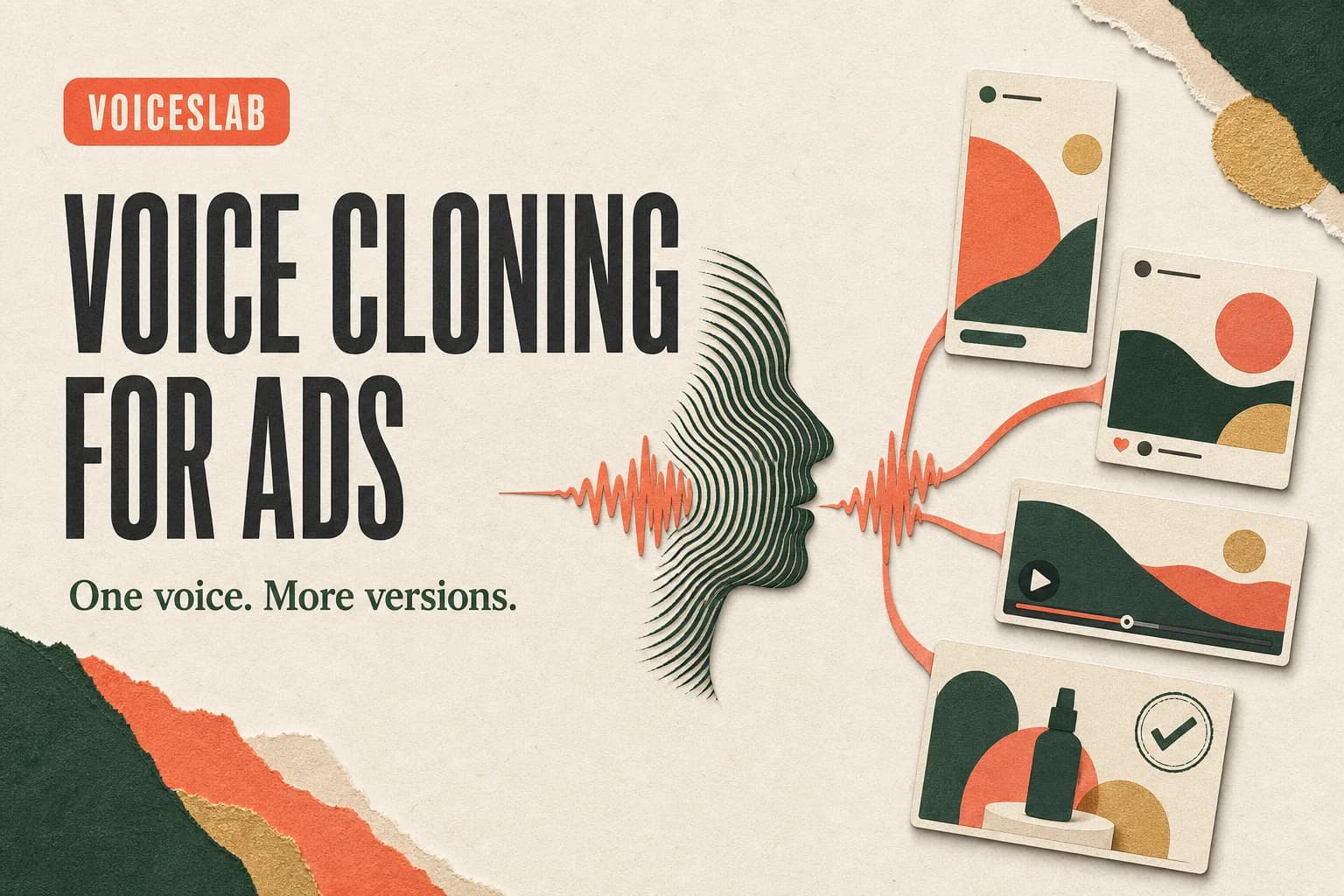
A 15-second ad rarely stays one 15-second ad. The opening changes for a new audience. The offer gets updated. A six-second cut needs a tighter read, and the same campaign may need versions for several markets.
Traditional voiceover works well for a finished script. It becomes awkward when the script is still moving. Each revision means another recording request, another edit, and another round of approvals. AI voice cloning gives marketing teams a different option: create an authorized digital version of a speaker's voice once, then use it to generate new narration as the campaign changes.
The value is a faster connection between copy and finished creative, with one recognizable voice across the versions that actually ship.
What AI voice cloning changes for marketers
Standard text-to-speech lets a team choose an existing voice and turn a script into audio. Voice cloning adds a specific identity. The output can sound like an authorized founder, spokesperson, creator, or voice actor rather than a different preset voice in every asset.
That matters because repetition builds familiarity. If a customer hears one voice in a demo and another in a paid social ad, the brand can feel less coherent even when the visual design is consistent.
Cloning separates the recording session from day-to-day copy changes. A team can approve the voice, then generate revised lines when a feature name or call to action changes.
Someone still has to choose the delivery, check pronunciation, and decide whether the narration fits the audience. Cloning removes repeated capture work, not creative judgment.
For a broader look at treating voice as a reusable business asset, see this guide to building a consistent brand voice.
Start with a voice brief, not the tool
Most weak AI ad reads begin before anyone generates audio. The team has not agreed on what the voice should sound like.
A useful voice brief is short. It names the audience, the speaker's role, the desired pace, and the traits to avoid. “Confident product specialist speaking to a curious first-time buyer” is more actionable than “energetic and premium.” Add a sample script that resembles the real ads rather than a generic paragraph.
Choose a speaker who can represent the brand over time, such as a founder, in-house host, or paid talent under a clear agreement. Confirm where the clone may be used and how long permission lasts.
The reference should match the intended work. A calm explainer sample may not suit a high-energy retail spot. Record clean speech in the advertising register you expect to reuse, without music or background voices.
Voiceslab creates a clone from a 10–60 second sample. A short recording can work well when it is clean, steady, and representative.
A practical ad production workflow
The easiest way to use a cloned voice is to build one approved master before multiplying versions.
Start with final copy for one primary placement. Generate the voiceover and review it against the picture and music. A sentence that reads cleanly on a page may feel crowded in a 15-second edit.
Once the master works, create variations from it:
- shorten the opening for a six-second bumper
- replace the first line for a different audience segment
- update the offer or deadline
- change the call to action for another landing page
- translate the approved meaning for another market
Name files by campaign, audience, length, language, and revision. Otherwise, fast generation produces a folder full of final, final-2, and final-new files.
Review each output in context and listen through phone speakers as well as headphones. Make sure the offer remains clear under music and the call to action has enough room to land.
Where cloned voices earn their keep
Performance advertising is an obvious fit because teams make many versions and retire them quickly. A cloned voice keeps the speaker recognizable when a winning creative needs a new offer, hook, or end card.
Product demos date quickly as features and interface labels change. A team can replace the affected sentence while preserving the narrator across the walkthrough.
For organic social, a clone can cover short explainers or localized cuts when a recognizable host cannot record every post. It should support the person's presence, not imitate approval they never gave.
Evergreen campaigns benefit too. A customer story may run for months, but one sentence eventually becomes stale. An existing clone makes that line easier to replace.
For one spot with a locked script, a direct performance may be quicker and offer more expressive range. Use cloning where revision volume and consistency justify the setup.
Use A/B testing without creating noise
Voice cloning makes variations easy. That does not mean every possible variation is worth testing.
Start by keeping the voice constant and changing one meaningful element, usually the hook, offer, or call to action. If the speaker, music, pacing, script, and visuals all change at once, the result may identify a winning ad but teach the team very little about why it won.
The cloned voice acts as a control. Two versions can keep the same identity and pacing while testing different openings, making the result easier to interpret.
Do not assume a more excited read will improve response. A restrained delivery may fit an expensive purchase, while a brighter one may suit a limited-time retail offer. The audience and placement decide.
Watch production metrics too. Track the time from approved copy to finished audio and how many revisions require rerecording. The workflow should improve quality or turnaround, not merely produce more files.
Build review and governance into the workflow
A cloned voice should have an owner. This person does not need to generate every ad, but they should know who can use the voice and what kind of content falls outside the agreement.
Keep the approved script, generated audio, final export, and consent record together. Decide whether an agency receives generation access or only approved files, and remove access when the engagement ends.
The creative review should cover four practical checks:
- Does the wording match the approved claim and offer?
- Does the voice sound like the intended speaker throughout?
- Are names, prices, URLs, and product terms pronounced correctly?
- Does the final mix remain clear on the target placement?
Pronunciation fixes are often copy fixes. Writing an abbreviation phonetically can work better than repeatedly regenerating the same line. Keep a pronunciation sheet for recurring brand terms.
Access control matters because a familiar voice carries authority. Restrict the clone to people who need it, and never use it to approve a claim the real speaker or brand has not reviewed.
Consent, claims, and AI disclosure
Marketing teams have two separate responsibilities: permission to use the voice and accuracy in the advertisement. Solving one does not solve the other.
Get explicit permission from the speaker before cloning. The agreement should cover paid advertising if that is the intended use. A contract for one conventional recording session may not automatically grant the right to build a reusable synthetic voice, so confirm the scope instead of guessing.
The ad itself still has to be accurate. The FTC's advertising guidance says advertising claims must be truthful, non-deceptive, fair, and supported by evidence. Generating a claim in an authorized voice does not make the claim substantiated.
Platform disclosure rules also matter. YouTube requires disclosure when realistic content is meaningfully altered or synthetically generated in a way that makes a real person appear to say or do something they did not. Other ad platforms and markets may use different standards, so check the current rule for every placement before launch.
Disclosure is not permission. Labeling a synthetic celebrity endorsement does not make it authorized. Use a voice you own or have clear rights to use, keep approval records, and avoid creating the impression that a person endorsed an offer they never reviewed.
FAQ
Can AI voice cloning replace voice actors in advertising?
It can reduce repeated recording for revisions and variations, but a skilled actor still contributes interpretation, emotional range, and direction. A practical model is to compensate and authorize talent for a reusable voice, then define how the clone may be used.
Can I use the same cloned voice across every campaign?
Technically, often yes. Creatively, one delivery may not fit every audience or product. Keep the identity consistent while adjusting the script and production around the campaign. Use another authorized voice when the role genuinely calls for it.
Is voice cloning useful for small marketing teams?
Yes, especially when one person handles copy, video, and distribution. The benefit is greatest when scripts change often or one campaign needs several lengths and channels. For a single fixed ad, conventional recording may be simpler.
Should AI voice ads always be labeled?
Requirements depend on the platform, market, content, and how the synthetic voice is used. Check the rules for each placement. When an ad could make viewers believe a real person personally delivered or endorsed a message they did not record, transparency and explicit approval are essential.
AI voice cloning works best in marketing when it is treated as part of production, not a novelty added at the end. Begin with an authorized speaker and a useful voice brief. Approve one master ad, create controlled variations, then keep scripts, audio, rights, and revisions organized.
If your team repeatedly waits on pickup sessions or publishes ads with a different narrator every week, try the Voiceslab voice cloning tool. Create a voice from a clean 10–60 second sample and test it on one real campaign variation before expanding the workflow.